Have you ever looked at your living room and wondered how you could make it feel bigger without knocking down walls or spending money on a complete renovation.
1. Choose a Simple Sofa-and-Chair Layout
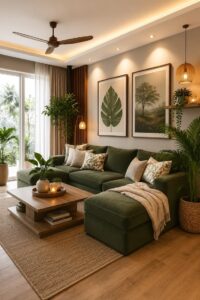
One of the easiest ways to improve a small living room is to simplify your seating arrangement.
Instead of filling the room with several large chairs and sofas, choose a comfortable sofa and one compact accent chair. Arrange them so people can talk comfortably without blocking the main walkway.
For example, place a two-seat sofa along one wall and position a lightweight chair opposite it or at a slight angle. Add a small coffee table between the seats if there is enough room.
This arrangement creates a clear seating area without making the entire room feel crowded.
How to make this layout work:
- Choose a sofa that fits the room’s actual dimensions.
- Use one accent chair instead of several bulky seats.
- Keep enough space to move comfortably between the furniture.
- Choose a small side table instead of adding another large piece.
- Remove furniture that serves no practical purpose.
If your living room is particularly narrow, try placing the accent chair at the end of the sofa rather than directly opposite it.
Best for: Small apartments, compact family living rooms, and rooms used mainly for conversation.
2. Position Your Sofa Against the Longest Wall
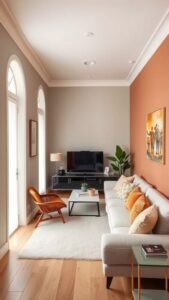
When you’re working with limited floor space, the position of your sofa can make a significant difference.
In many rectangular living rooms, placing the sofa against the longest wall helps free up the centre of the room. It can also make it easier to position a television, coffee table, and additional seating without creating unnecessary obstacles.
Start by identifying the longest uninterrupted wall in your living room. Consider placing your sofa there, provided it doesn’t block a doorway, window, radiator, or other important feature.
Next, position your television or media unit where it can be viewed comfortably from the sofa.
Avoid adding a large entertainment cabinet if a slim media console or wall-mounted television would meet your needs.
Small living room tip: Before moving your furniture, measure the wall and the sofa. A sofa that is too wide or deep can make the room feel crowded even when the rest of the furniture is minimal.
You should also leave enough space for doors to open and people to walk through the room comfortably.
Best for: Long, narrow living rooms and small homes with limited wall space.
3. Create a Floating Furniture Arrangement
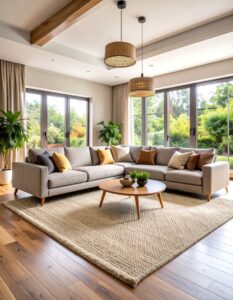
Pushing every piece of furniture against the wall isn’t always the best solution for a small living room.
Depending on the room’s shape, allowing a little space between the sofa and the wall can make the seating arrangement feel more intentional.
This is known as a floating furniture arrangement.
For example, you could position a compact sofa slightly away from the wall and place a narrow console table behind it. The console can hold a small lamp, a few books, or everyday essentials without requiring a separate table elsewhere.
However, you don’t need to float every piece of furniture. In a very small room, keeping the sofa against the wall may still be the most practical choice.
The important thing is to avoid creating awkward gaps that serve no purpose or make walking around difficult.
How to arrange floating furniture:
- Identify the main seating area.
- Position the sofa to create a comfortable conversation space.
- Check that the room still has a practical walking route.
- Add a slim console table only if there is sufficient room.
- Remove unnecessary furniture from the remaining floor space.
Best for: Open-plan apartments, square living rooms, and spaces that need clearly defined seating areas.
4. Choose a Compact Sectional Sofa
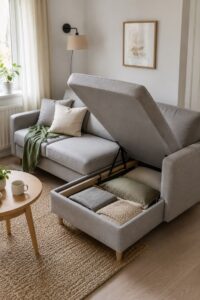
A sectional sofa can work beautifully in a small living room when its dimensions and shape suit the available space.
Although some sectional sofas are bulky, a compact L-shaped design can provide plenty of seating without requiring a separate sofa and multiple armchairs.
Place the longer side against a suitable wall and use the shorter section to define the seating area. Before choosing the orientation, consider where people enter the room and how they move through it.
For example, an L-shaped sofa positioned in a corner may leave the centre of the room available for a small coffee table and a clear walking route.
However, don’t assume that every corner needs a sectional. In a narrow room, a compact straight sofa may leave more usable space.
What to look for when choosing a sectional:
- A size that fits the room without blocking doorways.
- Slim arms that reduce unnecessary bulk.
- Reversible sections, if you may change the layout later.
- Built-in storage, where practical.
- Upholstery that complements your existing colour scheme.
Measure the sofa’s full footprint before buying it, including any chaise section.
Best for: Small family living rooms, corner seating areas, and homes where several people share one seating space.
5. Use a Round Coffee Table
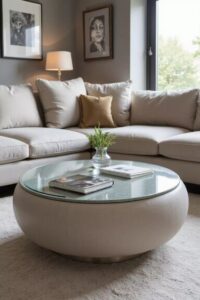
The shape of your coffee table can influence how easily you move around your living room.
A round coffee table has no sharp corners, which can make it easier to navigate around in a tight seating arrangement. It can also soften the appearance of a room filled with rectangular furniture.
Choose a table that is proportionate to your sofa rather than automatically selecting the smallest one available.
A table that is too large may obstruct movement, while one that is too small may not provide enough usable surface.
If you need extra storage, consider a round nesting table set or a small ottoman that can double as a footrest.
Transparent glass or acrylic tables are another option because they allow more of the floor and surrounding furniture to remain visible.
Remember that the best choice depends on your household. If you have young children, a stable table with rounded edges may be more practical than a delicate glass design.
Small-space tip: Leave comfortable clearance between your coffee table and the surrounding seats. The exact distance will depend on the furniture dimensions and how people use the room.
Best for: Small living rooms with tight walkways, compact seating areas, and homes where furniture corners frequently get in the way.
6. Keep One Clear Walking Path
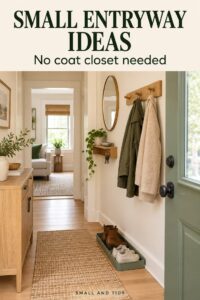
One of the most important small living room layout ideas is to make movement through the room easy.
When people must walk around several chairs, tables, and decorative objects to reach the sofa, the room can feel more cramped than it actually is.
Before arranging your furniture, identify the main route from the entrance to the rest of the home. Try to keep this route as clear as possible.
For example, if your living room connects to a hallway, avoid placing a chair or side table directly in the path people use most frequently.
You can arrange the sofa, television, and coffee table around the main walking route instead of forcing people to navigate through the seating area.
Follow these practical steps:
- Identify the main entrance and other frequently used doorways.
- Decide where people need to walk.
- Position large furniture outside those routes.
- Remove small tables or stools that regularly obstruct movement.
- Keep electrical cables tucked away safely.
- Test the arrangement by walking through the room.
Don’t focus only on how the room looks in photographs. A layout should also work for everyday activities.
Best for: Narrow living rooms, busy family homes, and small apartments with several doorways.
7. Choose Furniture with Exposed Legs
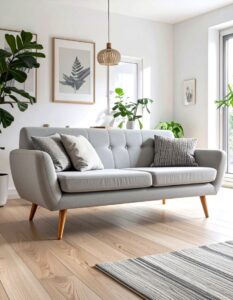
Furniture that sits directly on the floor can create a visually heavy appearance, particularly when several large pieces occupy a small room.
Sofas, armchairs, and cabinets with exposed legs allow you to see more of the floor underneath them. This can create a lighter visual effect and help the room feel less crowded.
For example, a compact sofa with slim wooden legs may appear less bulky than a similarly sized sofa with a solid base that reaches the floor.
You can apply the same principle to side tables, media consoles, and accent chairs.
However, exposed legs aren’t essential. If your current furniture is comfortable and functional, there’s no need to replace it simply to achieve this look.
You can often improve the appearance of a room by reducing clutter, rearranging furniture, and removing unnecessary pieces.
Furniture styles worth considering:
- Slim-legged sofas.
- Open-frame accent chairs.
- Narrow wooden side tables.
- Raised media consoles.
- Lightweight nesting tables.
Choose sturdy furniture that meets your needs rather than prioritising appearance alone.
Best for: Small apartments, minimalist living rooms, and spaces where heavy furniture dominates the visual appearance.
8. Use Mirrors to Create a Sense of Space
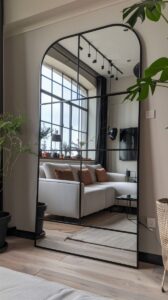
Mirrors are a useful decorating tool when you want a small living room to feel brighter and more open.
A well-positioned mirror can reflect daylight, lamps, or an attractive view, creating a greater sense of depth.
For example, placing a large mirror on a wall opposite or beside a window may help distribute light throughout the room, depending on the window’s position and the surrounding surfaces.
A mirror can also serve as a decorative focal point above a console table or beside a seating area.
You don’t need to cover every wall with mirrors. One thoughtfully positioned mirror may be enough.
How to use mirrors effectively:
- Identify the darkest part of your living room.
- Look for a wall that can reflect natural light or an attractive view.
- Choose a mirror that fits the wall without overwhelming the furniture.
- Position it securely and follow the manufacturer’s installation guidance.
- Avoid reflecting cluttered areas that make the room look busier.
If your living room receives little daylight, combine a mirror with suitable lamps and lighter window coverings.
Best for: Dark living rooms, small apartments, and rooms with limited natural light.
9. Make the Most of Vertical Wall Space
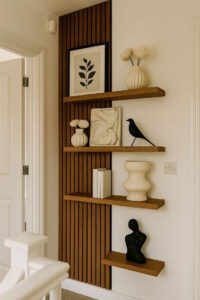
When floor space is limited, look upward.
Walls can provide valuable storage and display space without requiring additional cabinets or shelves on the floor.
For example, floating shelves can hold books, small plants, framed photographs, and a few decorative objects. A wall-mounted television can reduce the need for a bulky entertainment unit, while a tall, narrow bookcase can use space that might otherwise remain empty.
The goal is to organise your belongings without making every available wall look crowded.
Ideas for using vertical space:
- Install floating shelves above a desk or media console.
- Use a tall, narrow bookcase instead of a wide cabinet.
- Hang artwork to draw attention upward.
- Mount suitable lighting on the wall.
- Choose curtains that extend closer to the ceiling to emphasise room height.
Avoid placing too many decorative items on every shelf. A little empty space helps individual objects stand out.
Make sure shelves and wall-mounted items are securely installed and appropriate for the wall type and expected load.
Best for: Small apartments, compact living rooms with limited storage, and homes where floor space is especially valuable.
10. Choose Multifunctional Furniture
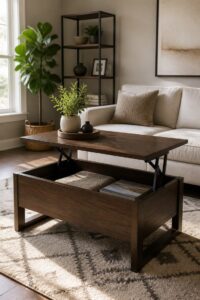
One of the smartest ways to make a small living room more practical is to choose furniture that performs more than one job.
Instead of filling the room with separate pieces for seating, storage, and occasional use, look for items that combine these functions.
For example, an upholstered storage ottoman can provide a footrest, extra seating when needed, and a place to keep blankets or magazines.
A nesting table set can provide extra surfaces when guests visit and be tucked away when it isn’t needed.
A compact sofa bed may also be useful if your living room occasionally serves as a guest room.
Multifunctional furniture ideas include:
- Storage ottomans.
- Nesting coffee tables.
- Sofa beds.
- Storage benches.
- Folding side tables.
- Compact desks that double as console tables.
Before purchasing anything, consider how often you’ll use its additional functions.
A piece of furniture isn’t automatically a good space-saving solution just because it offers several features. It still needs to fit the room and remain easy to use.
Best for: Studio apartments, small family homes, multipurpose rooms, and living rooms that occasionally accommodate overnight guests.
11. Use a Large Area Rug to Define the Space
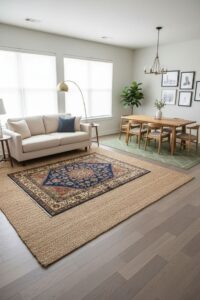
It might seem logical to choose the smallest possible rug for a small living room. However, a rug that’s too small can make the furniture arrangement look disconnected.
A suitably sized area rug can visually bring the seating pieces together and establish a clear living room zone.
For example, choose a rug that allows at least the front legs of the sofa and chairs to rest on it, provided the room’s dimensions allow this arrangement.
This creates a more unified appearance than placing a tiny rug in the centre of the seating area.
Consider the rug’s colour and pattern as well. A neutral rug can create a calm foundation, while a subtle pattern adds character without overwhelming the room.
You don’t have to choose plain white or beige. The best colour is one that works with your furniture, flooring, and personal style.
Before buying a rug:
- Measure the seating area.
- Mark the intended rug dimensions on the floor.
- Check that doors can open without catching the rug.
- Choose a design that complements the room.
- Use a suitable non-slip underlay where necessary.
A rug should support the layout rather than obstruct movement.
Best for: Open-plan living spaces, small rooms with separate seating and dining areas, and living rooms that need a more cohesive appearance.
12. Arrange Furniture Around Natural Light
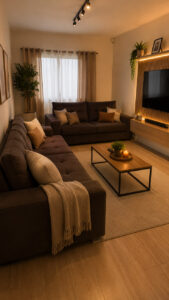
Natural light can make a small living room feel more welcoming and open.
If possible, arrange your furniture so that large pieces don’t unnecessarily block windows or prevent daylight from reaching the rest of the room.
For example, a tall bookcase positioned directly in front of a window may make the room feel darker. Moving it to another wall could allow more light into the space.
Light-filtering curtains can provide privacy while allowing some daylight to enter.
You can also combine natural light with table lamps, floor lamps, or wall lights to reduce dark corners in the evening.
Simple ways to make better use of light:
- Keep windows as unobstructed as practical.
- Choose lightweight curtains when they suit your privacy needs.
- Position tall furniture away from important sources of daylight.
- Use mirrors to reflect light where appropriate.
- Add lamps to darker corners.
- Consider light or coordinated wall colours if they suit your style.
Dark colours aren’t automatically unsuitable for small rooms. They can create a comfortable, dramatic atmosphere when used thoughtfully. The important thing is to balance the colour scheme with suitable lighting and furniture.
Best for: Living rooms with small windows, north-facing rooms, and compact spaces that tend to feel dark.